The Shift from Reactive to Proactive Defense
For decades, cybersecurity was primarily a game of cat and mouse, where defenders were always one step behind. Traditional security systems relied on signature-based detection, which essentially means they could only recognize a threat if it had been encountered and documented before. In today’s hyper-connected world, where thousands of new malware variants are released every single hour, this reactive approach is no longer sufficient. This is precisely where Artificial Intelligence (AI) steps in to redefine the battlefield.
AI-based security systems leverage machine learning algorithms to understand the context of data rather than just looking for known malicious files. By analyzing vast datasets, these systems can identify anomalies and suspicious patterns that would be invisible to the human eye. This transition from waiting for an attack to happen to predicting it before it manifests is why AI has become the cornerstone of modern digital infrastructure. It offers a layer of intelligence that evolves alongside the threats it is designed to stop.
Real-Time Threat Detection and Autonomous Response
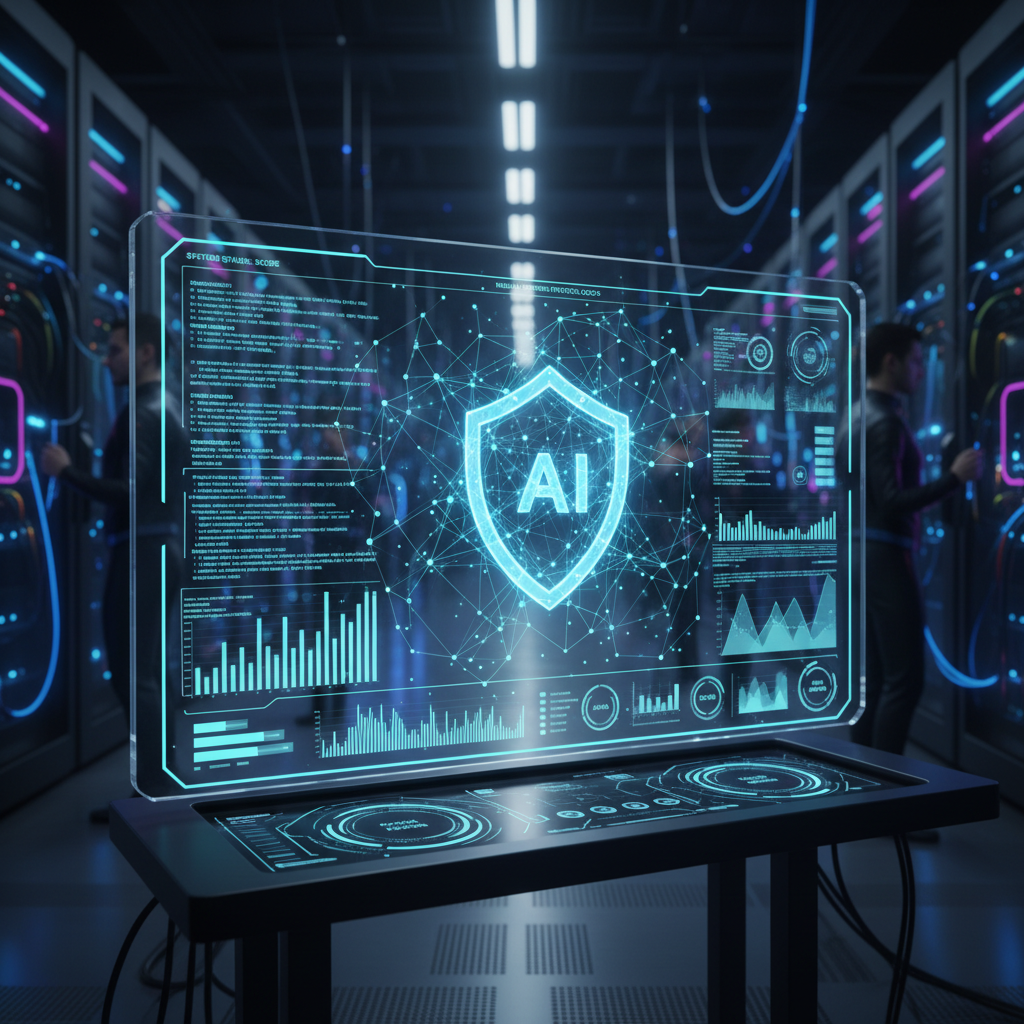
The sheer volume of data generated by modern enterprises makes manual monitoring an impossible task. Security Operations Centers (SOCs) are often overwhelmed by hundreds of thousands of alerts daily, leading to what professionals call “alert fatigue.” AI-driven systems mitigate this by automating the filtration process. They can distinguish between a harmless login attempt from a new location and a sophisticated brute-force attack in milliseconds, ensuring that human experts only focus on genuine high-risk incidents.
Furthermore, the speed of AI is its greatest asset. When a breach is detected, every second counts. An AI system can initiate an autonomous response, such as isolating a compromised workstation or blocking a suspicious IP address, long before a human administrator could even open the notification. This rapid intervention is critical in preventing lateral movement within a network, which is often how small breaches turn into catastrophic data leaks.
Understanding Behavioral Analytics (UEBA)
One of the most powerful features of AI in security is User and Entity Behavior Analytics (UEBA). Instead of focusing solely on external threats, AI monitors the typical behavior of users within the network. By establishing a “baseline” of normal activity, the system can instantly flag when a user suddenly accesses sensitive files they’ve never touched before or attempts to export large volumes of data at odd hours.
This behavioral approach is particularly effective against insider threats and stolen credentials. Even if a hacker manages to obtain a valid password, they cannot easily replicate the specific behavioral nuances of the actual user. AI notices these discrepancies and can trigger additional authentication steps or lock the account temporarily, providing a fail-safe that traditional systems lack.
The Predictive Power of Deep Learning
Deep learning, a subset of AI inspired by the structure of the human brain, allows security systems to recognize the underlying DNA of a cyberattack. Rather than looking for a specific piece of code, deep learning models analyze the intent and methodology of a process. This allows the system to block “zero-day” exploits—attacks that utilize previously unknown vulnerabilities for which no patch or signature yet exists.
- Pattern Recognition: AI identifies structural similarities between new threats and historical attacks.
- Heuristic Analysis: The system evaluates the behavior of code in a safe environment (sandboxing) before allowing it to run.
- Continuous Learning: Every blocked attack serves as a training lesson, making the system smarter and more resilient over time.
- Scalability: As your business grows, AI scales its monitoring capabilities without requiring a linear increase in security staff.
Eliminating the Human Element of Risk
It is a well-known fact in the cybersecurity industry that human error is the leading cause of data breaches. Whether it is a weak password, a misconfigured cloud bucket, or a successful phishing attempt, humans are often the weakest link. AI systems help bridge this gap by enforcing strict security protocols and identifying vulnerabilities that humans might overlook during routine maintenance.
Automation through AI also ensures that security patches are applied consistently and that configurations remain optimized. By taking over the repetitive and technical tasks, AI allows IT teams to focus on high-level strategy and incident management. This synergy between human intuition and machine precision creates a robust defense posture that is essential for any organization operating in the digital age.