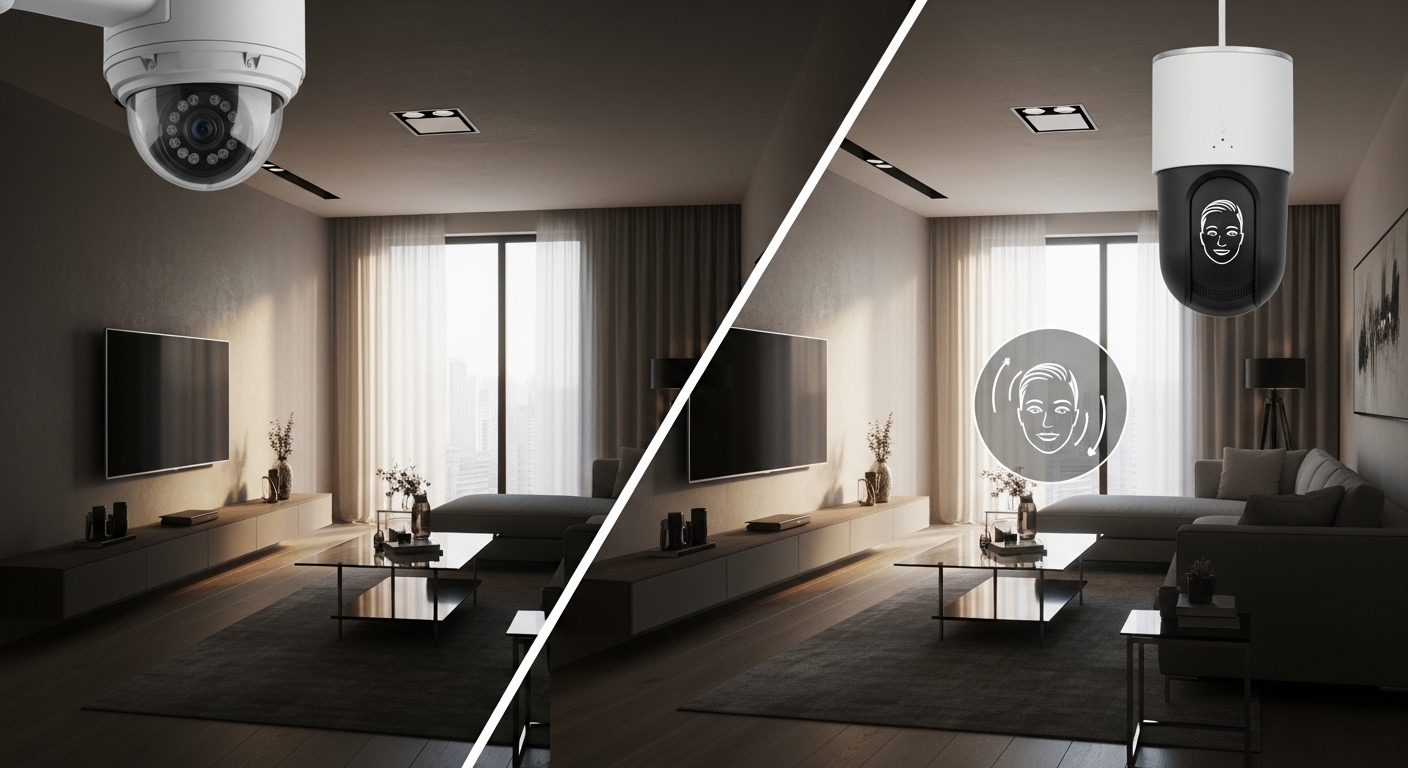
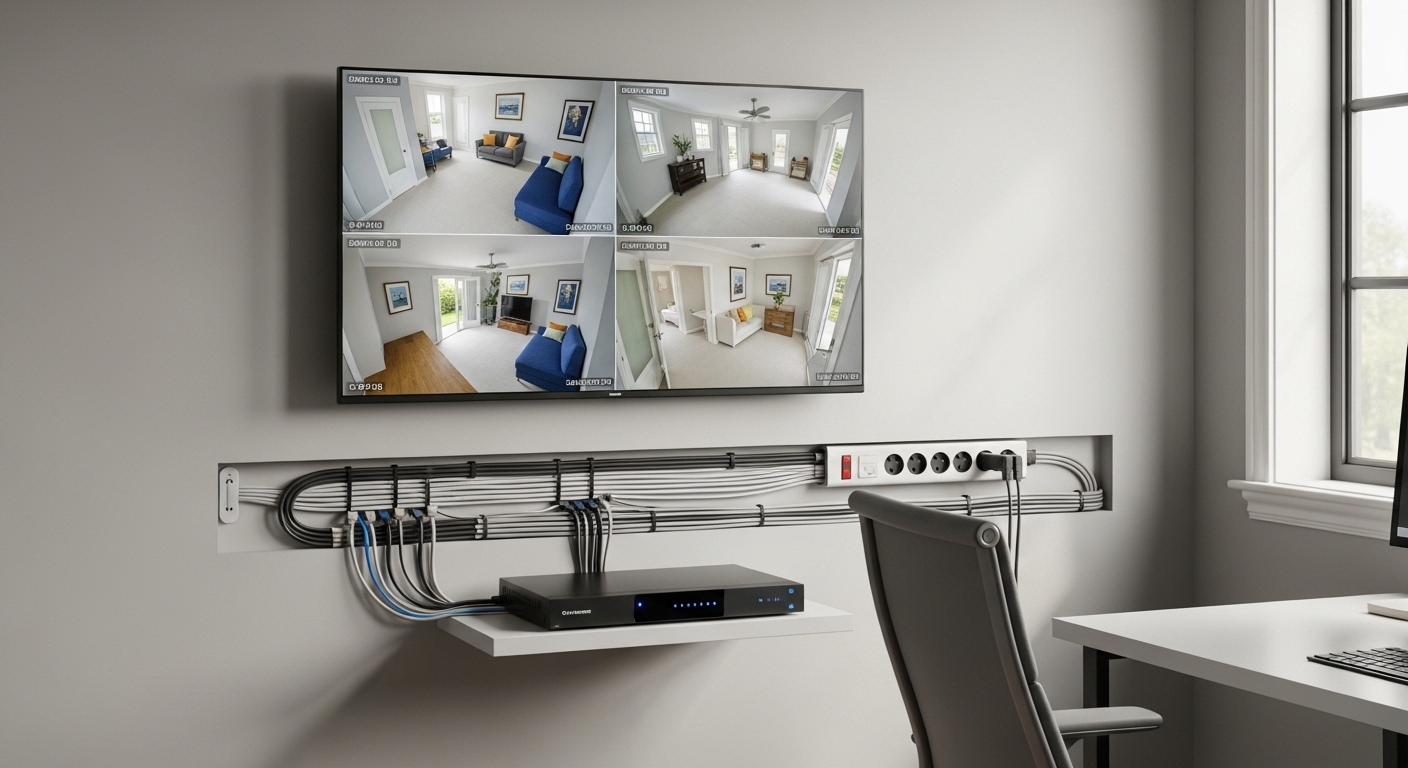
The Foundation of Home Surveillance: Understanding Traditional CCTV\n\nTraditional CCTV, or Closed-Circuit Television, has long been the gold standard for high-security environments, and for good reason. These systems function as a dedicated network of cameras that feed directly into a local storage device, typically a Digital Video Recorder (DVR) or a Network Video Recorder (NVR). The beauty of this setup lies in its independence. Because the system is hardwired, it does not rely on your home’s Wi-Fi stability to function. This means that even if your internet goes down or your router decides to reboot in the middle of the night, your cameras continue to record every single second without a hitch.\n\nMoreover, the physical integrity of a wired system offers a layer of security that wireless alternatives struggle to match. To disable a wired camera, an intruder would generally need to physically reach the device or cut the cables, which are often concealed within the walls or conduits. For homeowners who are serious about long-term data retention, traditional CCTV is unbeatable. With high-capacity hard drives, you can store months of high-definition footage locally. This closed-loop nature also appeals to privacy advocates who are uncomfortable with the idea of their private home videos being transmitted to and stored on a third-party company’s cloud servers.\n\n### The Strength of Physical Connectivity\n\nOne of the most significant technical advantages of traditional CCTV is the consistency of the video stream. Unlike smart cameras that may compress video heavily to save bandwidth, a wired system can handle massive amounts of data, allowing for higher bitrates and superior image quality. This clarity is often the difference between seeing a blurry figure and being able to identify specific clothing patterns or facial features during a forensic review. Additionally, wired systems are not susceptible to jamming devices that tech-savvy burglars sometimes use to disrupt Wi-Fi signals. By relying on a physical medium, you ensure that your security perimeter remains intact regardless of the digital noise surrounding your home.\n\n
\n\nFurthermore, the longevity of these systems is a major selling point. While smart cameras often become obsolete as software updates stop supporting older models, a traditional analog or IP system can last for a decade with minimal maintenance. You are not at the mercy of a manufacturer’s cloud service staying in business. As long as the hardware has power, it will do its job, making it the ultimate set-it-and-forget-it solution for serious property protection.\n\n## The Modern Revolution: Why Smart Cameras Are Taking Over\n\nIn contrast to the heavy-duty nature of CCTV, Smart Cameras are designed with the user experience as the top priority. These devices have democratized home security, making it accessible to renters and homeowners alike without the need for professional installers or complex wiring. A smart camera’s primary strength is its intelligence. These are not just eyes that watch; they are brains that process. Through sophisticated algorithms, smart cameras can distinguish between a human, a vehicle, and a neighbor’s dog, ensuring that you only get a notification when something truly noteworthy happens.\n\nThe real-time nature of smart cameras is what truly sets them apart from their traditional counterparts. Through a dedicated smartphone app, you can receive an alert the moment someone steps onto your porch. Features like two-way audio allow you to communicate with visitors or warn off potential intruders before a crime is even committed. For the modern, busy individual, the ability to check in on the kids or a pet while at the office provides a level of psychological comfort that a passive recording system simply cannot offer. It transforms security from a post-event investigation tool into an active prevention system.\n\n### AI Integration and Cloud Ecosystems\n\nThe smart aspect extends into a wider ecosystem of home automation. Most modern smart cameras can trigger other devices; for instance, your outdoor smart lights can turn on automatically when the camera detects motion. This creates a cohesive security web that acts as an active deterrent. While many of these advanced features, such as extended cloud storage or facial recognition, require a monthly subscription fee, the trade-off is often worth it for the sheer ease of use and accessibility.\n\nCloud storage also acts as a vital failsafe in many scenarios. Even if a burglar manages to steal the camera itself, the footage of the act is already safely stored on the internet, ready for you to share with the police. This off-site backup is something traditional DVR systems lack unless they are specifically configured for cloud mirroring, which can be a complex task for the average user. With a smart camera, your evidence is protected from physical tampering the moment it is recorded.\n\n## Security and Privacy: Navigating the Digital Risks\n\nWhen discussing which system is safer, we must look beyond physical security and consider digital safety. Smart cameras, by virtue of being connected to the internet, are theoretically more susceptible to remote hacking. If a user chooses a weak password or fails to enable Two-Factor Authentication (2FA), their private feeds could be exposed to bad actors. However, reputable brands now invest heavily in end-to-end encryption and regular security patches to mitigate these risks. It is a matter of digital hygiene just as much as hardware quality.\n\nPrivacy is the other side of the coin. With a traditional system, you own the hardware and the data. There is no risk of a company changing its privacy policy or a server outage rendering your cameras useless. Smart camera users, however, are tethered to the manufacturer’s infrastructure. If the company’s servers go down, so does your visibility. Choosing between the two often comes down to a choice between the reliability of local control and the convenience of global access. If you prefer keeping your data off the web, the local storage of CCTV is your best bet.\n\n## Making the Final Choice for Your Home\n\nUltimately, the decision between CCTV and Smart Cameras should be guided by your lifestyle and your home’s layout. If you own a large property with multiple entry points and want a fortress level of surveillance with no ongoing costs, a professional CCTV installation is the superior choice. Its robustness and local storage provide a level of permanence that is hard to match. On the other hand, if you value flexibility, AI-driven notifications, and a seamless integration with your other gadgets, a Smart Camera system is the way to go.\n\n Choose Traditional CCTV if: You want 24/7 high-resolution recording, have a permanent residence, and prioritize data privacy above all else.\n Choose Smart Camera if: You want instant mobile alerts, DIY setup, and interactive features like two-way talk for daily convenience.\n* Consider a Hybrid Approach: Many modern NVR systems now offer smart features, giving you the best of both worlds—wired reliability with a high-end app interface.\n\nWhatever you choose, remember that any security is better than no security. Investing in either system acts as a powerful deterrent and provides the peace of mind that your home is being watched over. Technology has reached a point where both options are highly effective, so the best system is simply the one that you will actually use and feel comfortable managing on a daily basis.