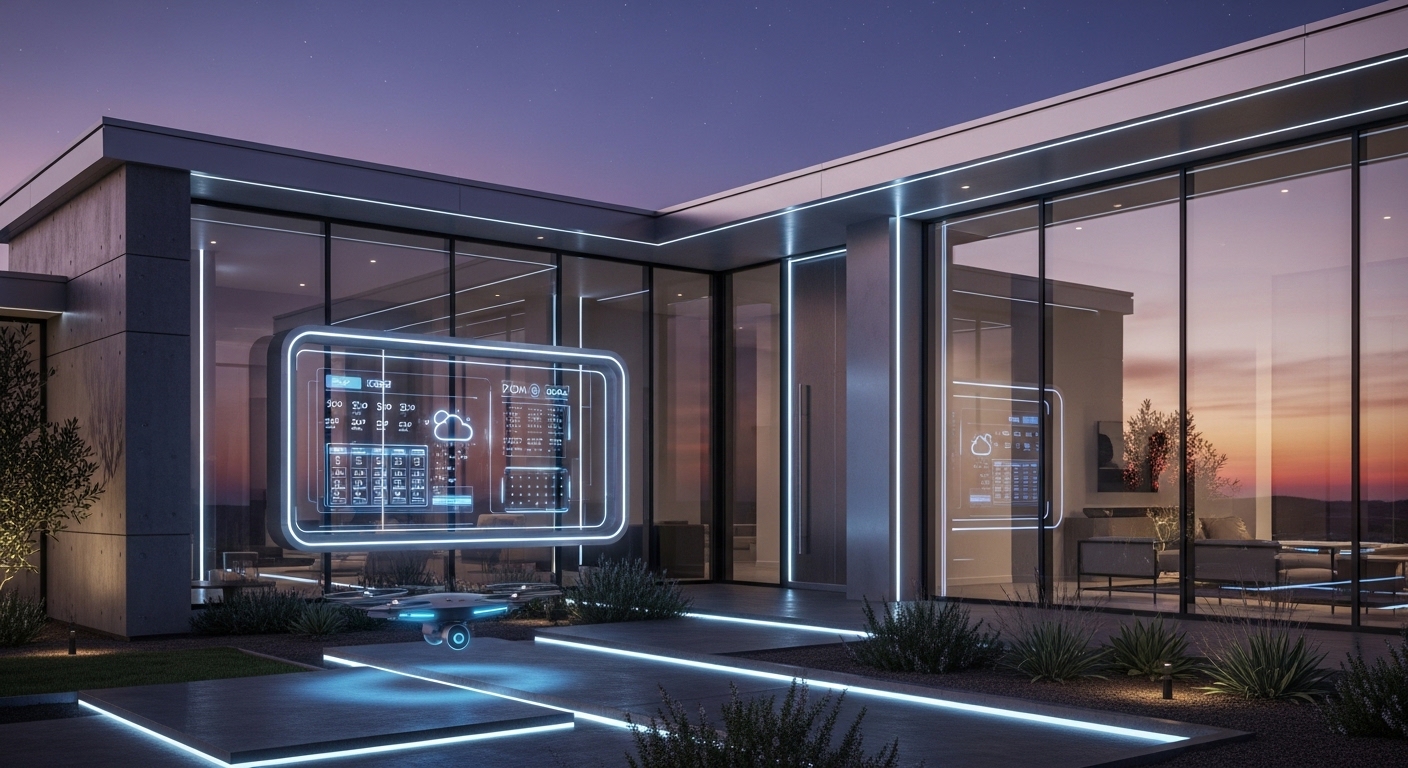
The Evolution of Domestic Safety: Why 2026 Changes Everything
As we navigate through 2026, the concept of home security has shifted dramatically from mere reactive alarms to proactive, intelligent ecosystems. Gone are the days when a simple motion sensor and a noisy siren were enough to provide peace of mind. Today, the integration of deep learning, ultra-fast connectivity, and decentralized processing has redefined what it means to be safe within our own four walls.
The modern homeowner is no longer looking for just hardware; they are seeking an invisible shield that understands context. This evolution is driven by the need for systems that can distinguish between a neighbor’s cat and a potential intruder, or a delivery person and a suspicious loiterer. As technology becomes more sophisticated, it also becomes more discreet, blending seamlessly into our daily lives while offering a level of protection that was once considered science fiction.
1. Predictive AI Surveillance: From Detection to Prevention
Beyond Simple Motion Alerts
In 2026, surveillance cameras have evolved into sophisticated analytical engines. Traditional cameras would bombard your smartphone with notifications for every swaying tree branch or passing car. However, current-generation AI utilizes predictive modeling to understand the intent behind movement. These systems analyze patterns over time, recognizing if someone is scouting a property or if they are simply walking their dog at an unusual hour.
This predictive capability allows the system to intervene before a breach even occurs. For instance, if the AI detects a person lingering at a specific perimeter point for more than a minute, it can automatically activate soft deterrents, such as pulsing exterior lights or a localized voice warning, effectively signaling that the property is actively monitored.
Behavior Recognition Technology
Behavioral analysis is the new gold standard in residential security. By utilizing skeletal tracking and gait analysis, modern systems can identify individuals even when their faces are obscured. This technology is particularly useful in low-light conditions or when intruders attempt to hide their identity with masks. The system learns the typical movement patterns of household members, and any deviation—such as a forced entry or a sudden fall—triggers an immediate, context-aware response.
2. Advanced Biometric Ecosystems and the Death of the Physical Key
Multi-Factor Biometric Verification
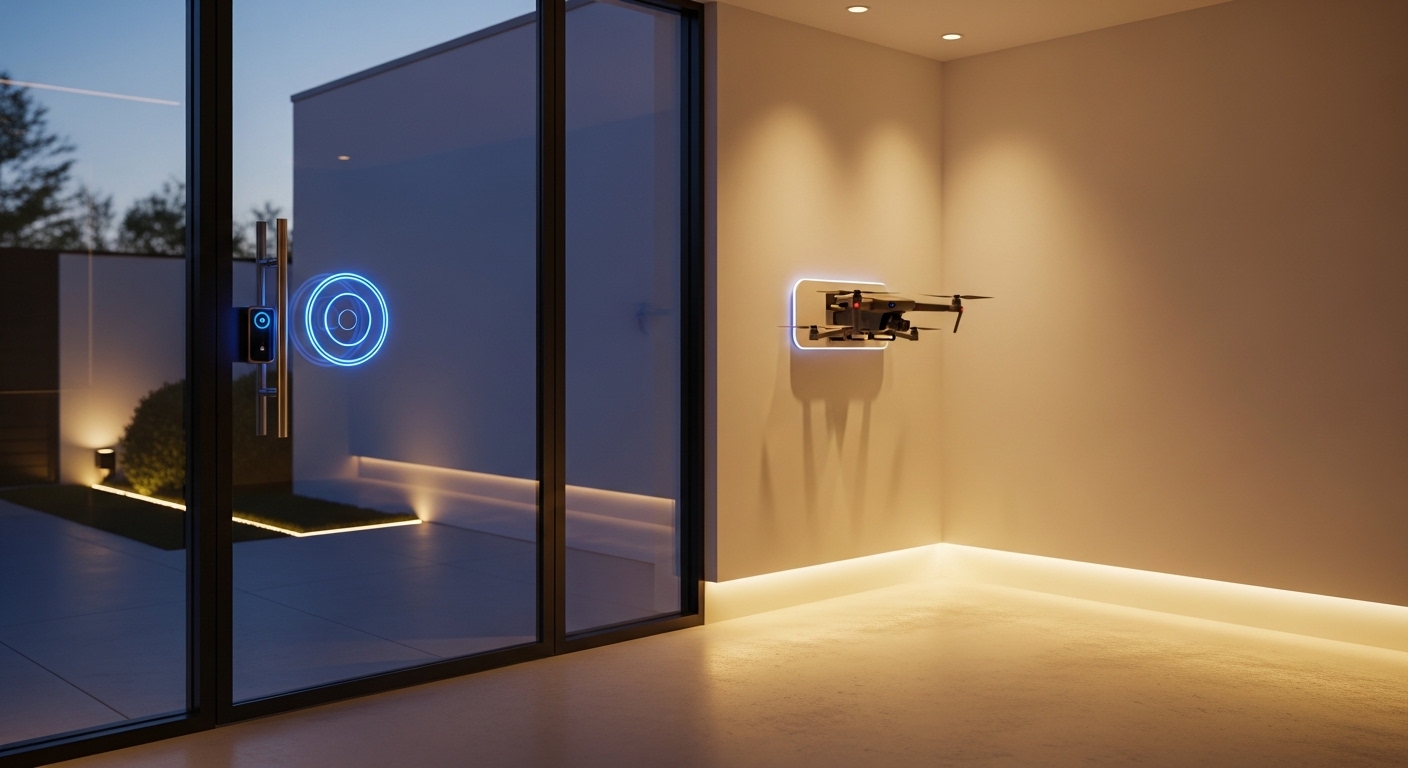
The physical key has become a relic of the past. In 2026, smart locks have transitioned from simple numerical codes to multi-factor biometric authentication. High-end systems now combine facial recognition with iris scanning or palm vein mapping. These methods are virtually impossible to spoof, providing a layer of security that traditional metal keys or even standard fingerprint scanners could never achieve.
What makes this truly revolutionary is the speed and convenience. As you approach your door, the system recognizes your gait and facial structure from a distance, initiating the iris scan as you reach the handle. The door unlocks silently and securely, all while logging the entry in your private security ledger. This seamless interaction ensures that security never feels like an obstacle to your daily routine.
Guest Management and Temporary Access
Managing access for visitors has also undergone a radical transformation. Instead of sharing a temporary PIN, homeowners can now issue encrypted biometric tokens. If you have a contractor or a pet sitter visiting, you can grant them access via a one-time facial profile that expires at a set time. This eliminates the risk of shared passwords and provides a detailed, unalterable log of exactly who entered the premises and for how long.
3. Autonomous Drone Sentinels for Perimeter Defense
Security is no longer tethered to fixed points on a wall. Autonomous drone technology has matured to the point where small, silent quadcopters serve as mobile sentries. These drones are housed in discreet charging docks and are programmed to launch automatically whenever an anomaly is detected in areas where cameras have blind spots.
Equipped with thermal imaging and high-definition sensors, these drones can track a moving object across large properties, providing a live bird’s-eye view to the homeowner and security monitoring centers. They act as a powerful visual deterrent; seeing a drone hover precisely over a potential intruder is often enough to end a burglary attempt before it begins. Furthermore, these drones are designed with advanced obstacle avoidance, allowing them to navigate through tight spaces or dense foliage without human intervention.
4. Localized Edge Computing: Privacy as a Priority
The Shift Away from the Cloud
One of the biggest concerns in recent years has been the privacy of home security data. In 2026, the industry has responded by moving away from cloud-dependent storage toward localized edge computing. Most high-tech security systems now process all video and biometric data locally on a dedicated home server. This means your private recordings never leave your house, protecting you from large-scale data breaches that have plagued cloud providers in the past.
Edge computing also significantly reduces latency. When an event is detected, the processing happens instantly on-site rather than traveling to a distant server and back. This split-second difference can be critical during an emergency. Homeowners now have total ownership of their data, with the option to encrypt and sync only specific events to a private vault if desired.
5. Holographic Presence and AR Deterrents
Simulating Occupancy with Precision
The best way to prevent a break-in is to make the house appear occupied. While older systems used simple light timers, 2026 brings us holographic presence simulation. Integrated with your smart home’s lighting and audio systems, this technology can project shadows and movement that mimic real human activity. From the outside, it looks like someone is walking through the living room or watching television, even if the house is completely empty.
Augmented Reality (AR) Security Interfaces
For the homeowner, managing security has moved into the realm of Augmented Reality. Instead of fumbling with a mobile app, you can use AR glasses or even a smartphone’s AR mode to see a digital overlay of your home’s security status. You can see ‘heat maps’ of where motion was last detected, check the battery levels of peripheral sensors, and virtually ‘look through’ walls using the feeds from your outdoor cameras. This intuitive interface makes complex security data easy to understand and act upon in real-time.
Conclusion: Building a Fortress in the Digital Age
Securing a home in 2026 is an exercise in balancing high-tech intervention with absolute privacy. The technologies we have discussed—from predictive AI and autonomous drones to edge computing and advanced biometrics—work in harmony to create a proactive defense system. These tools are no longer luxury add-ons; they are essential components of a modern residence.
By staying informed about these trends, you can ensure that your home remains a sanctuary. The future of home security is not just about keeping people out; it is about creating an intelligent environment that looks after its inhabitants with precision, speed, and unwavering reliability. As we continue to integrate these systems, the dream of a truly ‘safe’ smart home is finally becoming a reality for everyone.